Miles Currie

Miles H. Currie, PhD

Satellite AI/ML Scientist @ MyRadar

I develop AI and machine learning systems for satellite remote sensing and environmental hazard alerting. My expertise includes edge-deployed models on small satellites, sensor and detector trade studies for new instrument concepts, and the calibration and retrieval pipelines that turn multi- and hyperspectral imagery into operational GEOINT products. My background is in astronomy; I completed a PhD on the detectability of biosignatures on terrestrial exoplanets and continue to publish in this area occasionally.

Work — Earth Observation

At MyRadar I lead AI/ML development for onboard hazard detection on multi- and hyperspectral satellite platforms; my work spans algorithm design, edge deployment on flight hardware, and the calibration pipelines that make either feasible.

PythonPyTorchComputer visionHyperspectral Bayesian inferenceRadiative transferDIRSIGMODTRAN Edge computeCluster computing

Recognition: USGIF Golden Ticket Award (GEOINT Symposium) · NASA Postdoctoral Program Prize Fellowship, 2024 · UW Department Prize for Outstanding Graduate Student Research, 2023

Selected Projects

XPRIZE Wildfire

EOMulti-sensor fusionField work

I helped build and field MyRadar's entry to the XPRIZE Wildfire finals in New South Wales, Australia — a near-real-time fire detection system that fuses imagery from a diverse constellation of public satellites across LEO, SSO, and GEO. During the finals I embedded with the NSW Rural Fire Service in the field, interfacing directly with fire managers and frontline firefighters to ground-truth which satellite products are actually useful at the incident-command level; I came away convinced that operational utility is dictated as much by latency and product framing as by raw detection accuracy.

Hypersonic Plasma Characterization

AI/MLSWIRRemote sensing

I applied a transfer-learning CNN to short-wave infrared imagery of a rocket launch to recover flight state — altitude, Mach number, and slant range — from spectral and spatial plume features. The study compares physics-motivated features against learned convolutional representations and uses distance-invariant tests to disentangle genuine plume physics from trivial brightness scaling; results are promising for this initial case, however, generalization across vehicles, atmospheric conditions, and viewing geometries remains to be demonstrated, and I leave a multi-launch validation to future work.

Space Weather Monitoring

Hardware tradesOnboard AI/MLSpace weather

Mission-concept work, funded under a NASA SBIR, for a compact low-power smallsat platform performing onboard space weather alerting. My contributions span analytic sensor and detector trade studies across the proposed instrument suite, and onboard AI/ML pipelines for coronal mass ejection detection, solar flare detection and localization, and short-horizon space weather forecasting.

Aerosol Plume Retrieval

RetrievalRadiative transferOperational deployment

I developed a modular Python pipeline that ingests geostationary satellite imagery alongside numerical weather fields to retrieve the height, mass, and particle-size distribution of ash and aerosol plumes, and then propagates the resulting source term through an atmospheric dispersion model to project downwind transport and ground deposition. The retrieval is optimal-estimation against a radiative-transfer-derived radiance lookup table; the architecture is modular by design so that individual stages may be swapped, re-trained, or run in isolation during operational deployment.

Research — Astronomy

PhD in Astronomy and Astrobiology, University of Washington (2024), with the Virtual Planetary Laboratory. Selected first- and co-first-author work follows; see ORCID for the full publication list.

There's More to Life than O₂

Currie et al. 2023a · The Planetary Science Journal

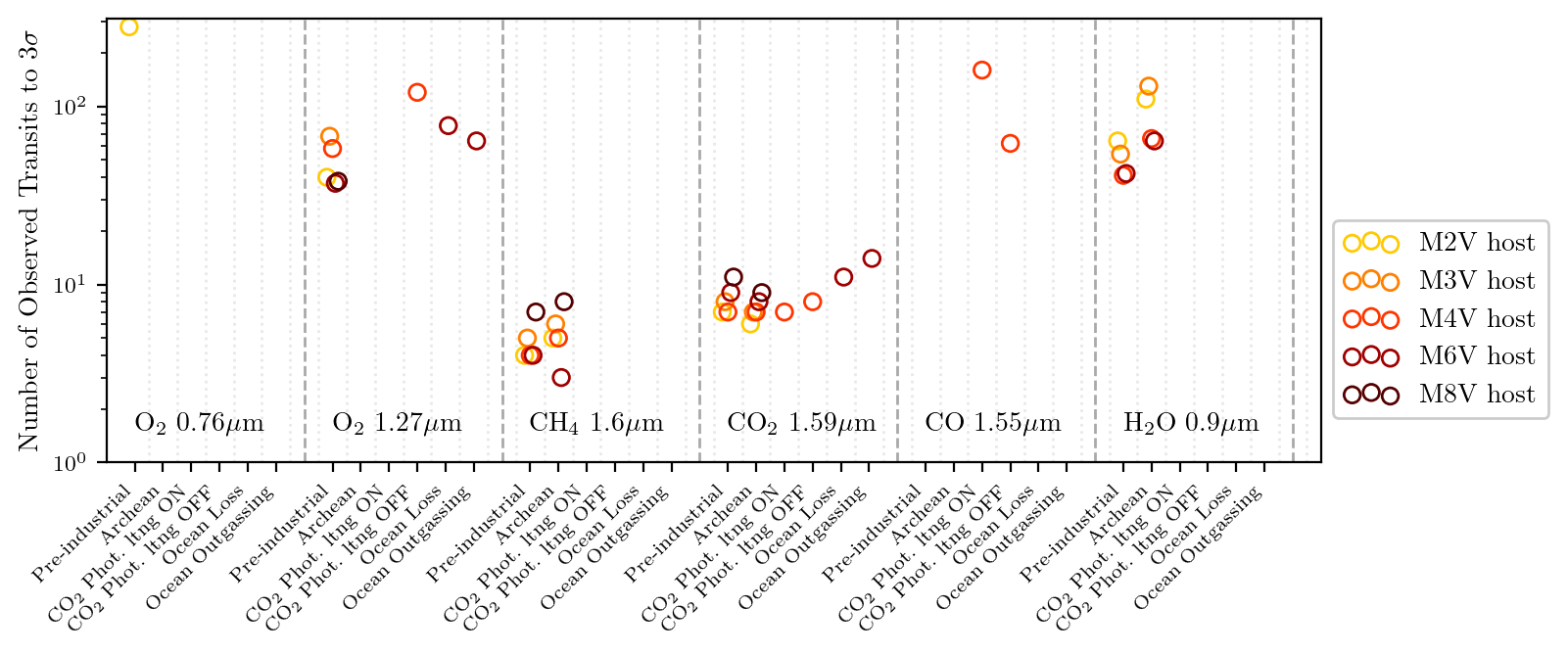
We show that ground-based extremely large telescopes may be able to detect the CO₂/CH₄ biosignature disequilibrium pair on nearby transiting terrestrial exoplanets in M-dwarf systems, with required integration times ranging from tens to hundreds of transit hours depending on the target and molecule. Paper →

Mitigating Worst-Case Exozodiacal Dust Structure

Currie et al. 2023b · The Astronomical Journal

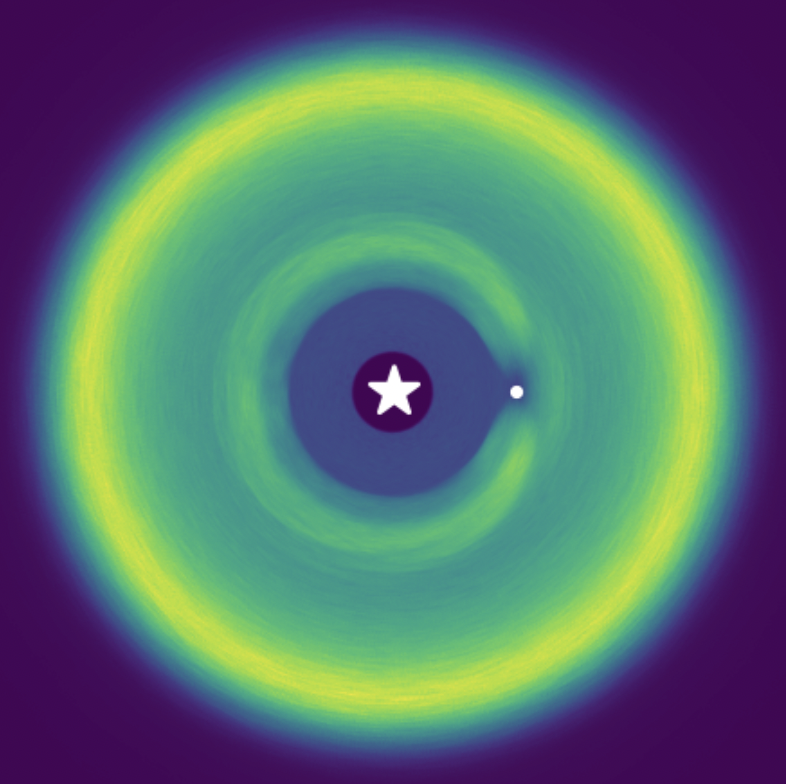
We find that an optimized high-pass filter may be capable of fitting and removing mean-motion-resonance exozodiacal dust structures, including worst-case morphologies, that would otherwise obscure Earth-like exoplanets in direct images from future flagship missions. Paper →

A Non-Detection of Iron at 55 Cancri e

Rasmussen & Currie et al. 2023 · The Astronomical Journal

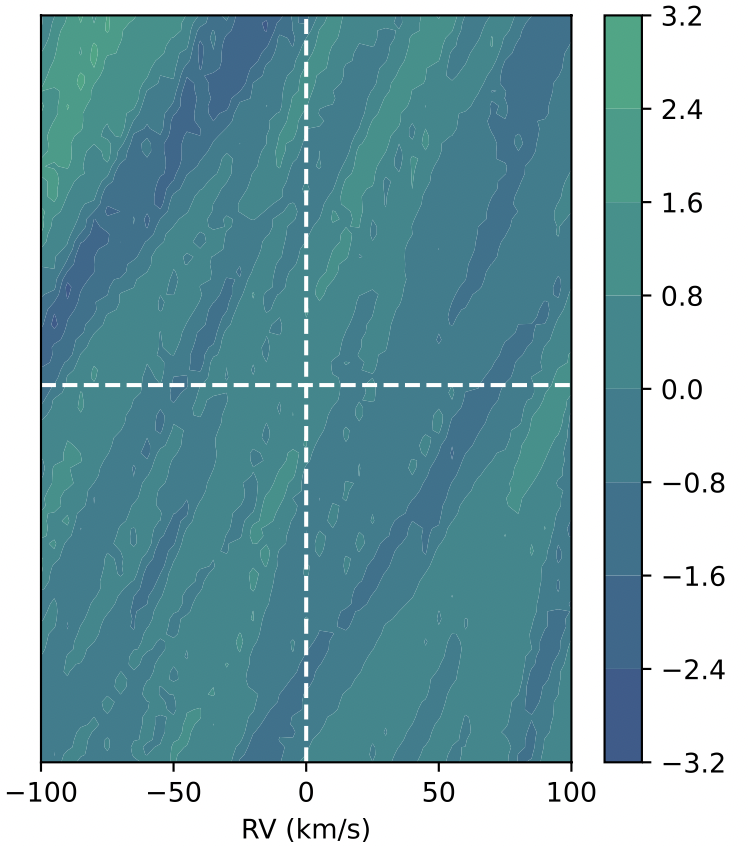
We report the first high-resolution emission study of the lava planet 55 Cancri e and find no evidence for iron in its atmosphere; this non-detection is consistent with the presence of a thin mineral atmosphere rather than a substantial silicate-vapor envelope. Paper →

Full publication list (ORCID) →

Writing

All posts →

Outdoors

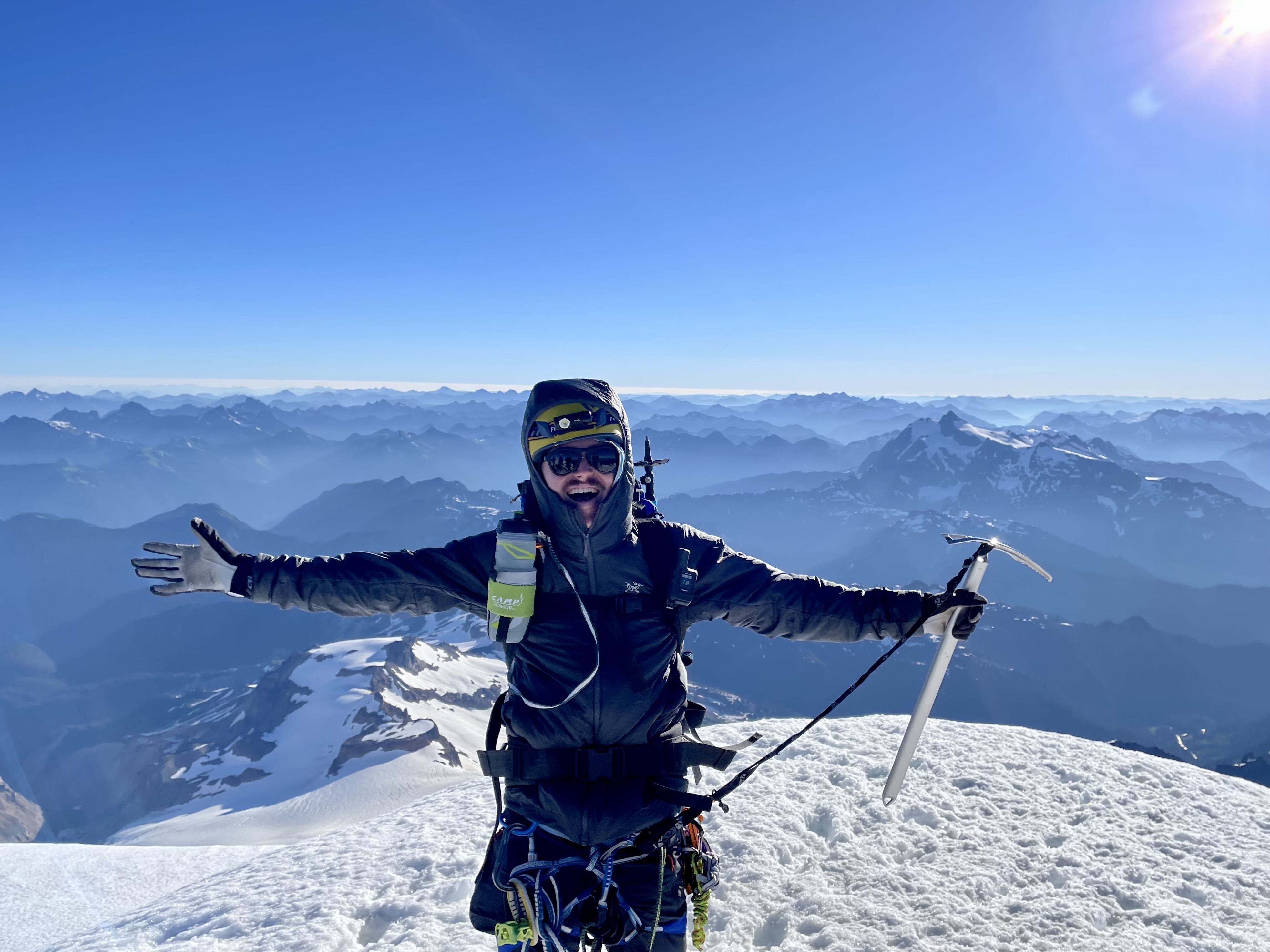
When I'm not working, you can find me on (or off) the trails-- mountaineering, trail running, the occasional alpine slog.

Summit of Mt. Baker